
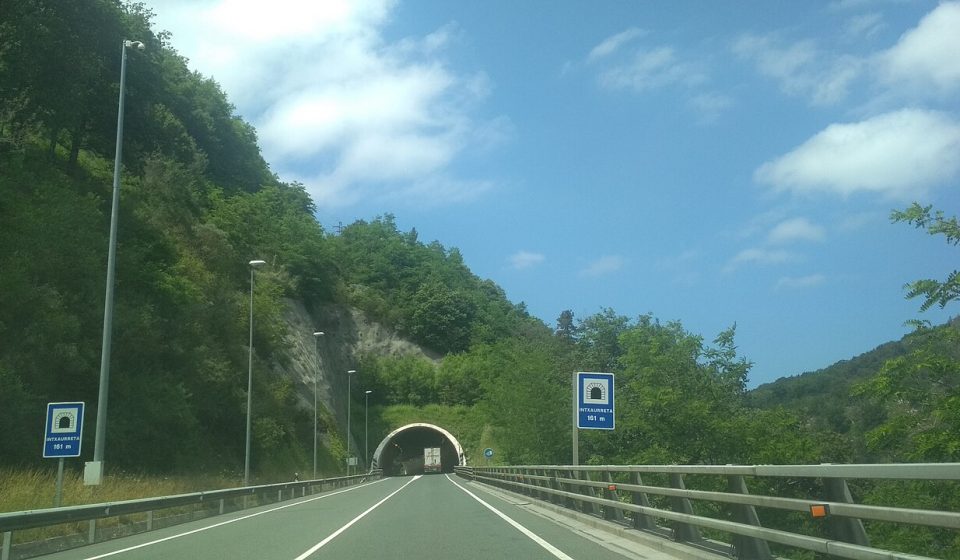

The type of mixture in the M30 tunnels affects the transit of the many vehicles that travel on the road daily. That’s why we’re going to describe the types of asphalt mixtures and their main properties and characteristics to explain why they have been chosen for Europe’s largest urban tunnel network.
What type of mixture is used on the M-30 tunnels?
To provide the tunnels with greater safety, discontinuous bitumen BBTM11A and BBTM11B mixtures were used.
Why was this type of mixture chosen for the M-30 tunnels?
As briefly explained in the previous section, the most important factor in building a tunnel of such length is safety. So we’ll explain the most important features, characteristics, and properties of these types of asphalt mixtures that have been used on the M30:
Fire protection
The Spanish Royal Decree 653/2006 of 26 May on minimum safety requirements for public road tunnels stipulates that surfaces must possess the appropriate safeguards to ensure that, in the event of a fire, fire does not spread. Fire protection measures are especially important in very long tunnels that pass through residential areas or public spaces. In this case, the asphalt mixture in place ensures safety during a fire and prevents the fire spreading.
Roadway noise
Roadway noise affects both driving comfort and the noise impact on nearby houses. The asphalt mixtures selected have the second highest noise-reduction properties after porous surfaces. Additionally, they reduce traffic noise and are able to absorb some of the noise created.
Anti-skid
As this type of mixture offers both a good microtexture and macrotexture it manages to improve tyre-surface traction. In other words, it allows the tyre to grip the surface well.
Longitudinal and transversal smoothness
This surface allows for thin layers to be applied in order to ensure road comfort for the user. Therefore, as well as improving safety, it also increases surface comfort. Road roughness causes more noise and less grip. Accordingly, it is essential that discontinuous bitumen mixtures are used to ensure surface smoothness. These mixtures also afford greater ease of maintenance and repair than concrete surfaces.
In short, the most important factor in building a tunnel is safety. Both if it’s going to be used by light private vehicles or by industrial heavy or goods vehicles. The right asphalt mixture allows for safe driving on long underground roads.
Photo: Bixintxo, CC BY-SA 4.0, via Wikimedia Commons