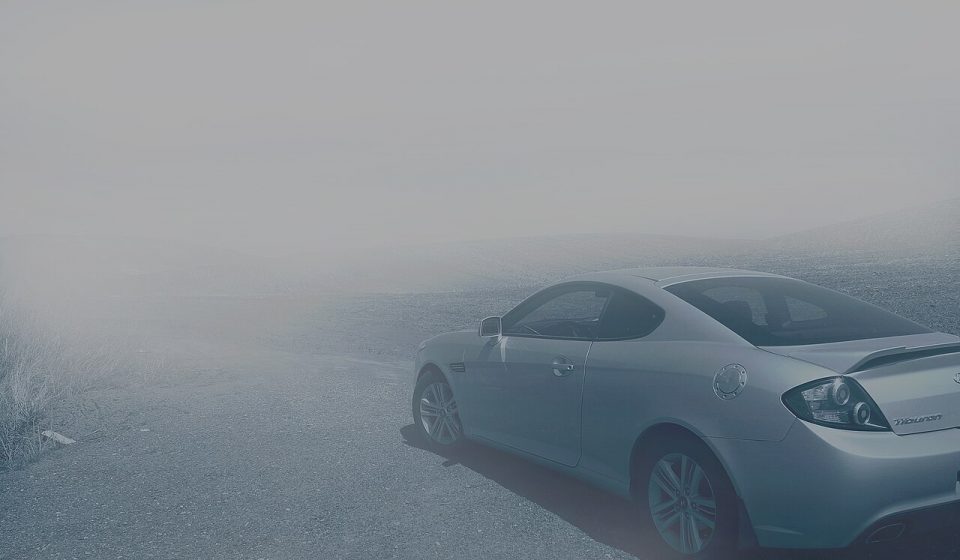

One of the biggest dangers on the road is driving when it is foggy .
Fog is a mass of low clouds whose main consequence when you are behind the wheel is that it does not allow you or other drivers to have adequate visibility. That is why it is essential to take precautions.
This is another risk on the road because fog can cause the surface to get wet and become more slippery. For this reason, it is essential to drive with caution, maintaining an adequate speed and respecting safety distances.
The sections of the M-30 most affected by fog
The areas on the M-30 most affected by fog are:
- South Junction: From kilometre 19 to 25 . This area is very close to the river, so there is a lot of humidity and fog builds up.
- The Paz-Manoteras junction with the M607: From kilometre 31 to kilometre 32 . This section is the highest area in Madrid.
So, if at any time, while driving on these sections of the M-30, there is fog, we recommend following these recommendations or tips.
Tips for driving safely in fog
It is true that driving in fog involves an additional risk when you are behind the wheel. But we recommend following a series of tips so you don’t have any problems and to drive safely.
Turn on the fog lights
The use of fog lights is regulated in article 106 of the General Traffic Law. This article states that the use of the front fog lights is optional, but using the rear fog lights is mandatory in cases of dense fog.
Although the front fog lights are not mandatory, we recommend using them when it is foggy, as it will allow you to illuminate the road better. In this way, you can improve the visibility field and in addition, the rest of the drivers will see you much better.
Do not use high beams
Do you know when high beams can be used? There are many drivers who think that they have to use them in order to see better. But this is not always the case. Using high beams is only recommended when roads are poorly lit and do not bother or when they do not dazzle other users.
In addition, in the case of fog, using high beams can make the lights reflect in the fog reflecting back towards you and dazzling you, the so-called mirror effect.
Increase safety distance
The safety distance is very important in good weather, so imagine when conditions are adverse, visibility is reduced and the ground is wet. The best thing to do in these cases is to increase the distance that separates you from the vehicle in front so you have time to react to any unforeseen circumstances.
Reduce speed and adapt it to your field of vision
It is important that you adapt to visibility conditions and slow down gradually. In this way the driver behind you will not be surprised.
Do not overtake on conventional roads
As visibility is reduced, it is better not to overtake. We recommend driving behind the car in front unhurriedly and carrying out the appropriate manoeuvers when the fog dissipates. We do not recommend imitating the behaviour of the car in front.
Take the longitudinal and lateral markings as a reference
Always having the road markings as a guide to avoid straying out of it is a good way to drive in fog.
Leave the road if necessary
If there is too much fog, it is best to pull into the hard shoulder and wait a while for it to dissipate. Then you can continue driving calmly.
Once the fog disappears do not forget to turn off the fog lights
This is very important. If you use the fog lights when it is not cloudy not only can you cause damage to other drivers, but you may even be fined.
As you can see, driving in fog requires you to be more careful than you normally would. It is important to use the lights correctly, maintain an adequate speed that adapts to the road conditions and increase the safety distance. The possible danger of fog can be greatly minimised if these tips are followed.
Related reading
Photo: Frantzou Fleurine frantzou, CC0, via Wikimedia Commons