

Are you still unaware of the speed at which radars go off ? According to official data from the Directorate General of Traffic (DGT), in 2017 there were a total of 1.7 million fines given out for speeding in Spain. These fines were applied using both fixed radars and mobile radars. We explain this below.
Margin of error established according to the type of radar
We all know that radars are not perfect for measuring the speed of a moving vehicle in such a short space of time. Therefore, the DGT has established a small margin of error so as not to impose fines on drivers that have only exceeded the speed limit by a few kilometres per hour.
Fixed radars
These are radars that are located in a fixed position, such as on poles, porticos, etc. For a speed of up to 100 km/h a margin of error of 5 km/h has been established. This means that you will be fined when, for example, driving at 95 km/h in a 90 km/h stretch. However, for a speed exceeding 100 km/h, the margin of error is 5%, knowing that the maximum speed permitted in Spain is 120 km/h.
Mobile radars
These are located in police cars, whether moving or stationary. Their margin of error at established speeds of up to 100 km/h is 7 km/h and, over 100 km/h, there will be a 5% margin of error allowed on this road.
Stretch radars
These are devices that are capable of measuring the time it takes to travel between point A and point B. Stretch radars are formed by two control points, an entry point and exit point. What does this mean? That as soon as you go through control point A, the cameras will take a picture of you and when you go through point B another will be taken. The system will automatically measure the time it has taken you to cross that stretch of road. If the time is less than what is established, you will have been driving over the speed limit.
The established margins of error are 5 km/h for speeds of up to 100 km/h, and for speeds over 100 km/h, the margin of error is 5%.
Helicopter with radar (Pegasus)
This helicopter can capture the instantaneous speed of any vehicle from up to 300 metres high and at a distance of up to 1,000 meters. For speeds of up to 100 km/h, it has a 10 km/h margin of error. For speeds greater than 100 km/h, the margin of error is 10% of the speed.
What are the maximum speeds permitted?
- Cars and motorcycles: the generic speed on carriageways and motorways is 120 km/h. On conventional roads it is 90 km/h. And for towns/cities, 50 km/h.
- Buses: can drive at speeds of up to 100 km/h on carriageways and motorways. However, driving on secondary roads at speeds greater than 90 km/h is not permitted and in cities the limit is set at 50 km/h.
- Lorries: the maximum speed on carriageways and motorways is 90 km/h. For conventional roads, the limit is 80 km/h.
- School transport: the speed limit will be 10 km/h less than a car on all roads.
- Mopeds: the maximum speed allowed is 45 km/h.
To conclude, it is important to emphasise that the permitted speeds may vary depending on the vehicle. That’s why it’s important to stay up to date on these aspects. Furthermore, we recommend always driving within the speed limits. And finally, not all radars have the same margin of error. It is important to know how to differentiate between all the different types of radars in order to avoid being fined.
Related reading
- Types of speed cameras on the M-30: Where they usually are and why?
- Seat belt radars: How do they work and where are they?
- Who controls the speed cameras on the M-30 in Madrid?
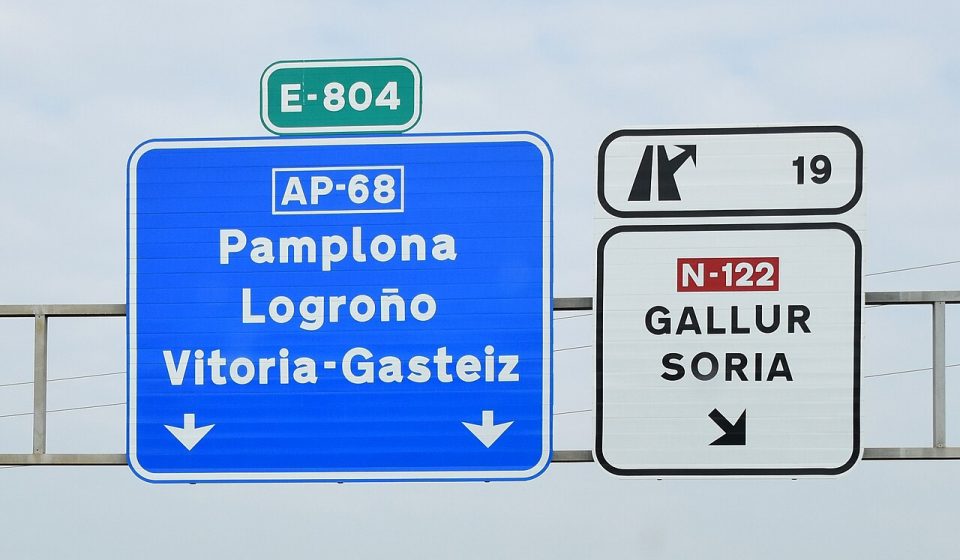
Photo: Vasyatka1, CC BY-SA 4.0, via Wikimedia Commons


[…] What speed do radars go off at? […]